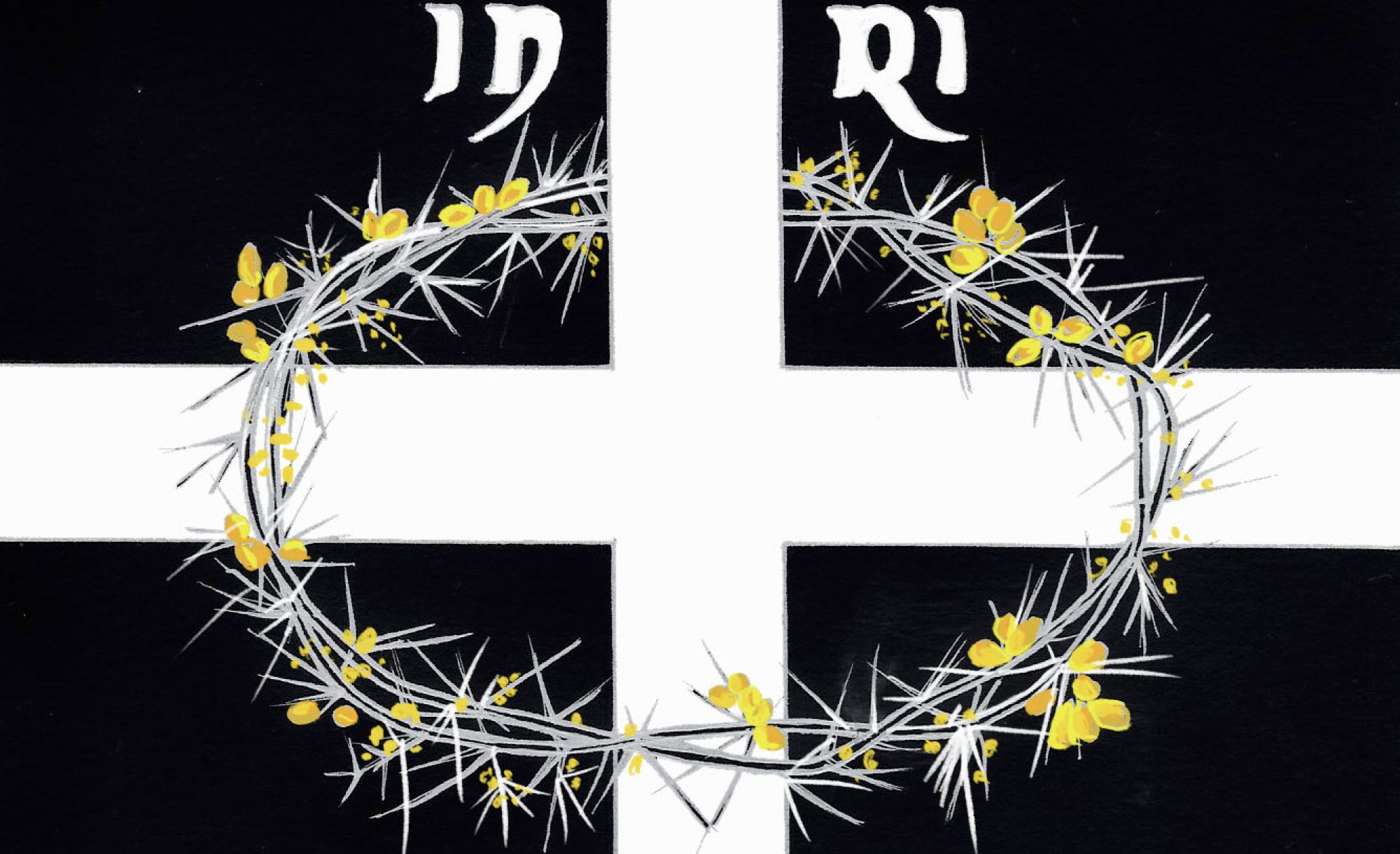

Cornwall is a beautiful place, with a past that has often been ugly; a past that needs healing. The Reformation was particularly brutal here, where reprisals after the war/massacre/’Prayerbook Rebellion’ of 1549 led to the deaths of thousands of Cornish people, the suffering of their families, and to enduring scorn and ignominy for Cornish culture, especially the language.
Catholics and Protestants co-exist happily now, and by producing an ecumenical version of the Stations of the Cross, we are bringing back practices that our churches have not seen for hundreds of years, in the language that was taken from us.
Our work also represents some of the first classical music ever written in Cornish.
It is a beautiful language and the number of speakers is growing again. We want to bring its fresh blossoming to people in Cornwall and reach out to our cousins in Breizh (Brittany), and to the established Cornish communities of mining towns across the planet.
We plan to take the work to Devon, which shares much of Cornwall’s history. The legendary Beer Quarry Caves, on Devon’s Jurassic Coast, contains a two-mile-long system of limestone caverns first dug out by the Romans. The quarrying continued until 1922. Nowadays, the Caves host live performances, and the Breselor Ensemble has been asked to perform next year in the recently excavated chapel. This place of secret worship was used by Catholics during the time of religious persecution. Devon is also the site of some of the bloodiest battles in modern English history; much Cornish blood was shed here.
Cornish heritage is of significance further afield, too – not just to the destination countries of Cornish emigrants, but to other Celtic countries. Cornwall is at the centre of the Celtic seaboard, and a network of trade routes used from at least the Bronze Age, and certainly by the Romans. The music would fit in nicely amidst the glory of Rome.
We hope that people of all religions and none will be able to find beauty (tekter), love (kerensa) and peace (kres) within the music of the Passion. We are consciously choosing to honour Cornwall’s Catholic heritage and, by contributing a Cornish choral setting for the Stations of the Cross, we hope to help in the move for Cornish to take its rightful place as a world language within a world religion.
 The Breselor Ensemble